




Entrance: 20.00€
Young under 30: 10€ (discount rules)
Price: 5.00€
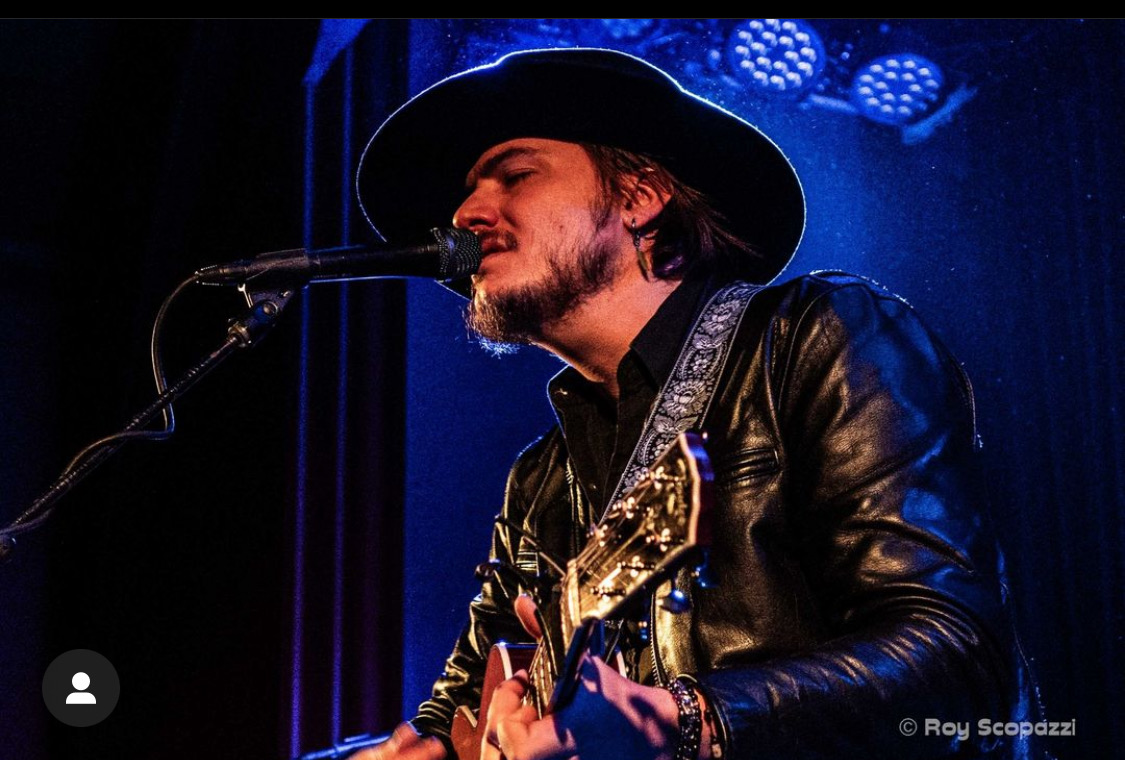
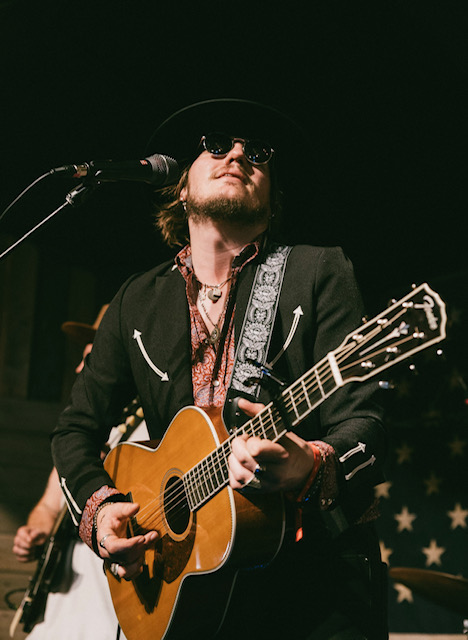
Dylan LeBlanc: voice, guitar
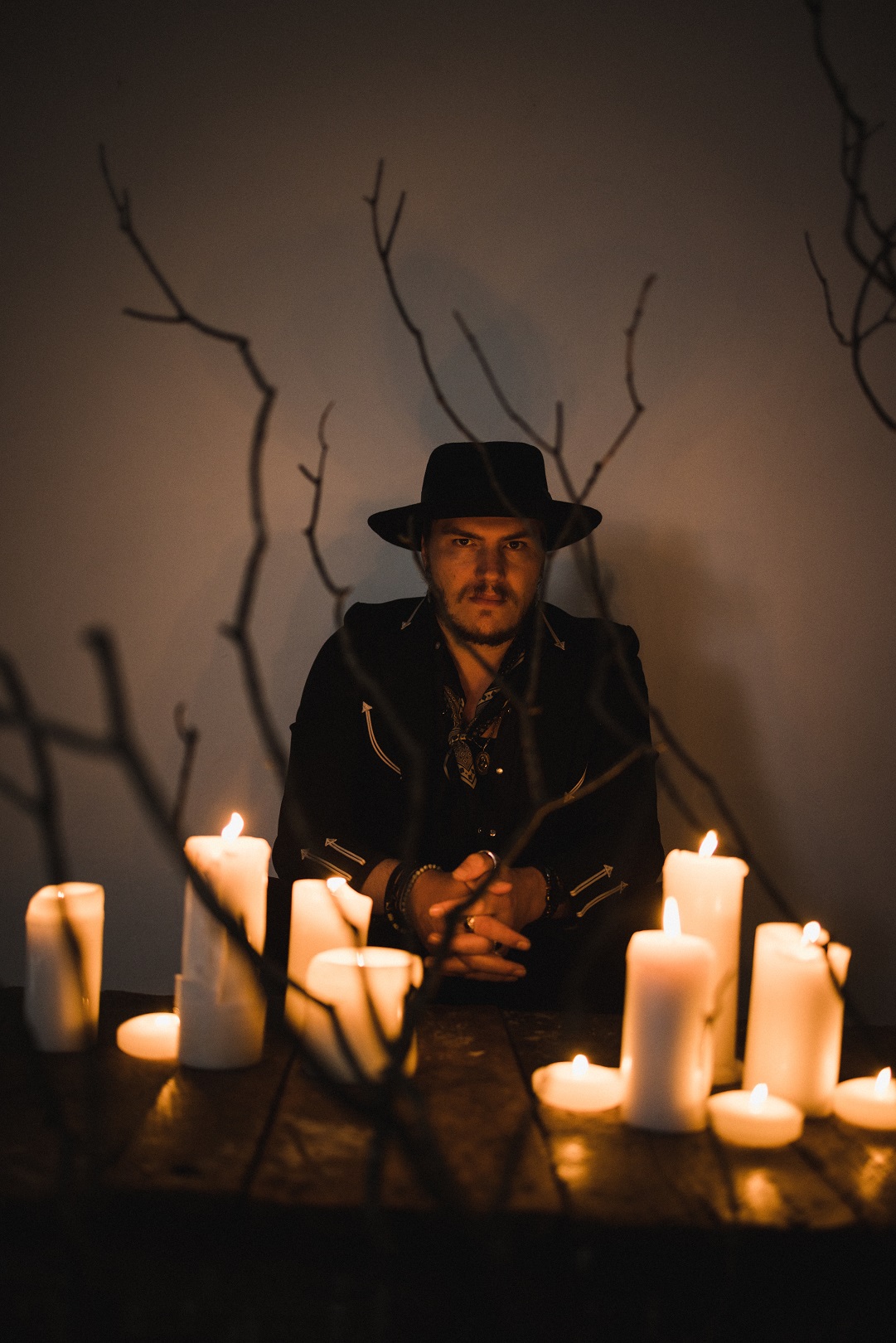
Dylan LeBlanc emerges as one of the most authentic, intense, and charismatic voices in today’s Americana, southern rock, and contemporary folk scenes. A singer-songwriter, musician, and more recently a producer, LeBlanc embodies the tormented yet resilient spirit of the American Deep South, forging a career built on raw storytelling and a voice that cuts straight to the soul. Born in Shreveport, Louisiana, and raised between the banks of the Mississippi and the historic FAME Studios in Muscle Shoals, Alabama, LeBlanc grew up immersed in music. His father, James LeBlanc, was a songwriter for the legendary FAME, giving young Dylan an early baptism into the soul, country, and rock sounds that would shape his musical identity. Dropping out of high school at 16 to pursue music wasn’t an act of rebellion, but a calling—fueled by the wisdom of his grandmother and the discovery of songwriting giants like John Prine and Leonard Cohen. LeBlanc’s style is a haunting and magnetic blend of genres. His music weaves introspective folk, alternative country, and psychedelic rock into a sound often described with 'Southern Gothic' undertones. His voice, which has evolved remarkably over the years, is today a powerful and refined instrument—capable of conveying vulnerability and a wisdom far beyond his age. His influences range from J.J. Cale to Neil Young, with a fondness for string arrangements reminiscent of Randy Newman and a lyrical depth inspired by writers like Flannery O’Connor. A year after the remarkable success of his only full-band Italian show, Dylan LeBlanc returns to Italy for a guitar-and-voice tour—the best way to experience the raw, intimate heart of his songs, which are open-chest confessions. Through his music, he has confronted and overcome personal demons, addiction, and existential crises. Fatherhood and emotional stability marked a turning point, bringing newfound hope and a less self-centered drive into his recent work.
Today, Dylan LeBlanc is not only a songwriter but a storyteller who has found both his voice and his peace, transforming pain into art and offering audiences an authentic musical experience capable of reaching—and touching—anyone willing to listen. His is a tale of fall and redemption, told with a guitar in his hand and his heart in his throat. Dylan LeBlanc is a singer-songwriter and multi-instrumentalist who often finds himself flirting with the edge -- or “dancing on a razor,” as he calls it -- as it is all he has ever known. A verdict vagabond since he was a little boy tossed between Texas, Louisiana and Alabama, LeBlanc thrives on the precipice, never staying in one place for too long. It is that nomadic spirit that drew him not only to a life as a touring musician, but also to the beast that titles his newest record: "Coyote." LeBlanc says he has always related to the insatiable, scavenging nature of the wily coyote. Much like the animal, LeBlanc is a wanderer who knows when to trust his instincts, musically and otherwise. It is a spiritual kinship that runs deep, but he credits one particularly hair-raising face-to-face instance with solidifying his bond with the animal. LeBlanc was in Austin, Texas, climbing the face of a 100-foot cliff, gambling with Mother Nature’s good graces as he pulled himself up by tree branches. Once he reached the top, all that laid ahead of him was a lush treeline. There was a breath of stillness, then the sound of a thunderous rustling that drew closer and closer to him. In a blink, LeBlanc watched as a frenzied raccoon came speeding out of the treeline, trailed by an animal that stopped and stared at him with striking intensity: a coyote. “We’re looking at each other dead in the eyes…and I’m saying -- out loud -- ‘If it’s you or me, I am going to kick you off the side of this cliff. I’m not going down.’ It was intense, this human-animal moment,” LeBlanc recalls. “I’ve never forgotten that… he was just trying to survive and so was I.”
"Coyote" is LeBlanc’s first self-produced release, boasting a cherry-picked lineup of what he calls 'killer session players,' such as drummer Fred Eltringham (Ringo Starr, Sheryl Crow), pianist Jim "Moose" Brown (Bob Seger), and bass player Seth Kaufman (Lana Del Rey). Though ‘Coyote’ covers familiar ground for LeBlanc of living on the edge of danger and its many consequences, the record is both autobiographical and a concept album built around the character of Coyote, a man on the run. LeBlanc has seen shades of a life not unlike the character of Coyote. He, too, strayed from the straight and narrow and sparred with managing anger in his adolescence. Just as the brutal truth of “Hate” describes that the most gnarled parts of Coyote were molded by his harrowing experiences, it is something LeBlanc feels is universal, as hate does not discriminate. “I went to school with people from all walks of life. We were different, but we thought, ‘We’re all poor,’ so we’re all in the same boat. We all grew up in chaos. It was the ‘90s in Louisiana on the border of Texas… that air was thick, man. Sink or swim type of mentality.” LeBlanc is the first to warmly acknowledge his rough edges and tendency to chest-up to conflict, both the result of the volatility and instability of his youth. Now, no longer a boy who always had to be on alert and ready to defend himself, LeBlanc recognizes that his roots do not define or limit the man he is today. The cover art of a coyote wounded by arrows reflects just that, symbolizing LeBlanc’s resilience through what he has experienced: “The coyote is still upright, even though he’s full of arrows, even though he has been shot at and wounded many times. He still keeps going in defiance of everything that has been thrown at him. You can’t get an arrow out completely. You can break one side of it off, but the arrow is still there… there’s still a scar. It becomes a part of you… of your identity.” Considering the distinct wisdom and lifetimes in his voice, it is no surprise that LeBlanc has known hardships, but he is a shining example of what beauty comes from perseverance. LeBlanc’s tenacity has paid off in spades, leading him to a record deal with ATO Records, releasing the critically acclaimed "Renegade" in 2019, and now "Coyote," which LeBlanc says is “the record he has always wanted to make.” Now in his thirties with a fiancé and a daughter he adores, LeBlanc is the closest he has ever been to the man he has always strived to be. With endearing candor, he confesses he is still learning to be less hot-headed and more gentle; but he doesn’t think about dying every day, like he used to. LeBlanc credits fatherhood for the perspective he has now on what matters, and his key concern is remaining devoted to those he loves most. Though far removed from a perilous life like Coyote’s, LeBlanc admits he still feels as if he is dancing on a razor’s edge all the same. The goodness he is surrounded by only gives him more to lose, with each glimmer carrying an asterisk of fear. One misstep and he worries that it all could vanish, but the lionhearted LeBlanc seems to forget he once unnerved even a wild coyote with his eyes alone.